
Making friends at work is probably one of the hardest things you will have to do. Unlike at university, where everyone is a similar age, in a similar situation, and perhaps has a similar interest in the subject you are studying, the office has none of that. It also has status, rivals, egos, and politics, which can get in the way of fostering lifelong friendships. Making friends at work is something I encourage you to do not only because you will spend 90% of your time at work, and having a couple of friends makes it more enjoyable, but also because when it comes to promotions and pay rises, friends will look out for each other. This is your ultimate guide on how to make friends at work.
How to Make Friends at Work
Making friends at work, even if you’re shy, doesn’t need to be awkward or intimidating. Here are the simple stages to foster authentic relationships in the office:
- Shift Mindset
- Start Small
- Find Natural Opportunities to Connect
- Share About Yourself
- Be Consistent
- Take It Out of the Office
Shift the Mindset
When it comes to the office, most people fall into the trap of keeping their professional and personal lives separate. Did you know that 60% of adults have had a workplace romance? So we are doing a terrible job of keeping work and relationships separate. Let’s take a proactive approach in building good working and personal relationships with our colleagues.
All that needs to happen is a simple mental shift where you ask yourself:
“How can I learn about this person?”
You need to be genuinely curious about the other person—not just about what they do at their desk, but how they live outside of the 9-to-5.
You will not believe what people will share with you if you start getting curious about the team you are in, rather than assuming you know everything about them because you know their work experience and performance.
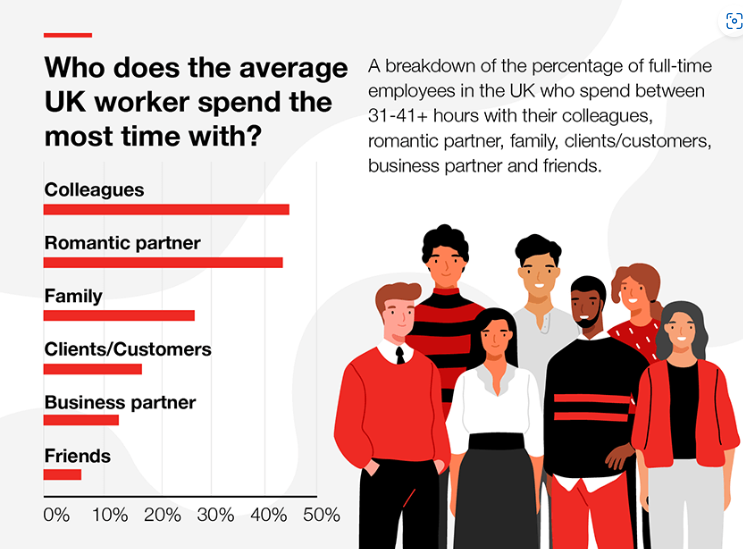
As you can see, 40% of your time is spent with colleagues over friends, compared to less than 10% with your friends.
Start Small
Connections do not happen very quickly in the workplace, and if you’re the person who wants to be friends with everyone, you are going to look desperate. Starting small and focusing on creating long-term friendships is the key to building those relationships at work.
During your workday, you want to create a series of micro connections.
This can be as simple as:
- Saying good morning to colleagues
- Asking what they are working on
- Learning about their favourite Netflix show
- Finding out what they did over the weekend
- Asking what they are doing after work
When it comes to making friends at work, start small and focus on changing your mindset and being genuinely curious about the other person.
Find Natural Opportunities to Connect
As you go about your day at work, you will find a few genuine moments for connection. When you are on the lookout for these opportunities, you will see that there are possibilities to find connections with anyone. Get your head out of emails and see the possibilities.
Many people, when they are not working from home, are in open-plan offices, which are the perfect place to meet new people. Here are some examples:
- Strike up small talk at the kettle or microwave
- Before a meeting starts, speak to the person next to you
- Rather than emailing someone, walk to their desk and have a 2-minute chat before asking your question
- Sit next to someone new at lunch
- Offer to make someone a tea and bring it back with some chit-chat
- Company events are opportunities to meet new people in different departments
- Someone’s leaving drinks
- Someone’s birthday in the canteen
- Passing people in the hallway
- Training days
- After-work activities
These are just some of the natural opportunities you can take to make new friends at work.
Share About Yourself
During work hours, we often see people only as their title and competence: Dave from accounting and Sarah from marketing are just who they are. How do you think people in the office see you?
Are you a movie buff?
The foodie who tries the newest place in town?
An international jet-setter?
A bookworm?
The odds are they don’t; they see you just like you see them.
Sharing little bits of information about yourself can help create closeness between people. During an experiment on the effects of self-disclosure, researchers found that when participants shared information about themselves with others, it led to greater liking and other positive impressions.
You can see from the results below:
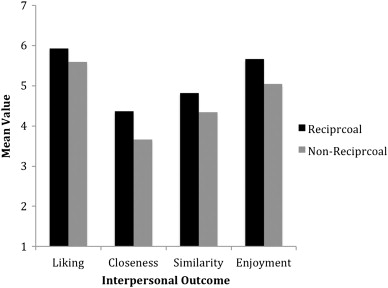
When participants experienced reciprocal disclosure (sharing information about each other), there were significant levels of enjoyment, closeness, and liking.
This is not a therapy session, so don’t share childhood traumas, but you could share:
- What you are currently working on
- A project you are proud of
- What you do on weekends
- A passion of yours
- Outside interests
- Your career ambitions
You will find that just by sharing a little, you can develop a friendship.
Be Consistent
Making friends at work is a long-term activity; you should never stop trying to make new connections. Some colleagues leave, others move departments, and some get promoted, so the skill of making friends should stick with you. Think of your own experiences: have you ever met someone for 15 minutes and become friends? Probably not.
Building friendships takes investment, like putting pennies in a piggy bank. Eventually, you will be able to make a withdrawal.
Take the pressure off yourself because it is not about how much talking or how many good questions you ask—it’s the small, frequent interactions you have. Start to make positive habits and make interacting with others a core element of your professional communication; it will make developing friendships much easier.
Take It Out of the Office
Have you ever heard the saying, “More business gets done on the golf course than in the boardroom”?
Humans are social animals; we want to work with people we like. As the quote suggests, some of the most effective business moves happen on yachts in Monaco, on the golf course, and in smokers’ rooms.
Eventually, you want to graduate from cubicle interactions and take it outside the office. Sports and activities are ideal for this as they facilitate social interaction. Here are some suggestions:
- Going out for lunch rather than sitting in the canteen
- Grabbing coffee from the local café
- Inviting someone out for after-work drinks
- Finding shared interests and doing them together
Once you have built up a bit of rapport and learned more about their interests, you can choose an activity that best suits their situation.
My Opinion on Work Friendships
You will not be surprised that I believe work friendships can positively affect your personal life and career. Let me take things in a different direction: you may think it’s uncool or not authentic to try and make friends at work. The truth is, I have met many people who have formed lifelong friendships in the corporate world and enriched their lives in ways they never knew they could. As a manager or employer, you should encourage your staff to foster friendships with each other to create a positive work culture and better incentives for staff retention.